
What if the workplace was not just a place to work but a system designed to help people truly thrive?
In a world shaped by hybrid work, global complexity, and rising expectations around well-being and inclusion, organisations are struggling to create environments that are both high-performing and human-centered. Traditional workplace models no longer hold. What is needed is a new way of thinking, one that goes beyond efficiency to embrace connection, adaptability, and sustainability.
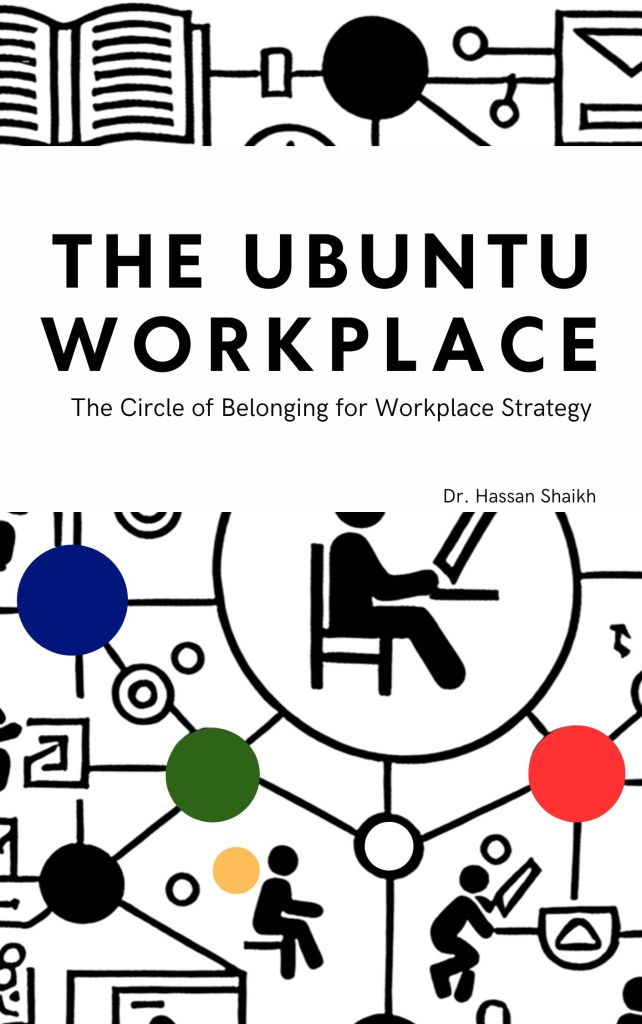
The Ubuntu Workplace introduces a transformative approach rooted in the philosophy: “I am because we are.” It reframes the workplace as a living, interconnected system where people, spaces, and experiences are deeply linked. Rather than optimising for individuals alone, it focuses on creating conditions where collective experience and individual needs coexist and strengthen one another.
Through a powerful integration of strategy, design, and human insight, this book explores:
- How workplaces can move from static environments to adaptive, responsive systems
- Why sensory experience, connection, mental well-being, and physical health are critical to performance
- How hybrid work can become a model of cohesion rather than fragmentation
- What it means to design for diversity, not as a challenge, but as a strength
- How organisations can measure and improve experience through the Ubuntu Readiness Assessment Matrix
Drawing from over two decades of global experience and grounded in academic research, Dr. Hassan Shaikh brings both strategic clarity and personal depth to the future of work. This is not just a framework, it is a practice, offering practical tools, models, and insights that organisations can apply immediately.
More than a guide to workplace design, this book is an invitation to rethink what work itself can be.
A workplace is not defined by what it provides,
but by how people experience and sustain themselves within it.
The Ubuntu Workplace is essential reading for everyone that uses an office space. Even more so for leaders, designers, strategists, and organisations seeking to build workplaces that are not only productive, but connected, inclusive, and sustainable for the future.
 Dr. Hassan Shaikh